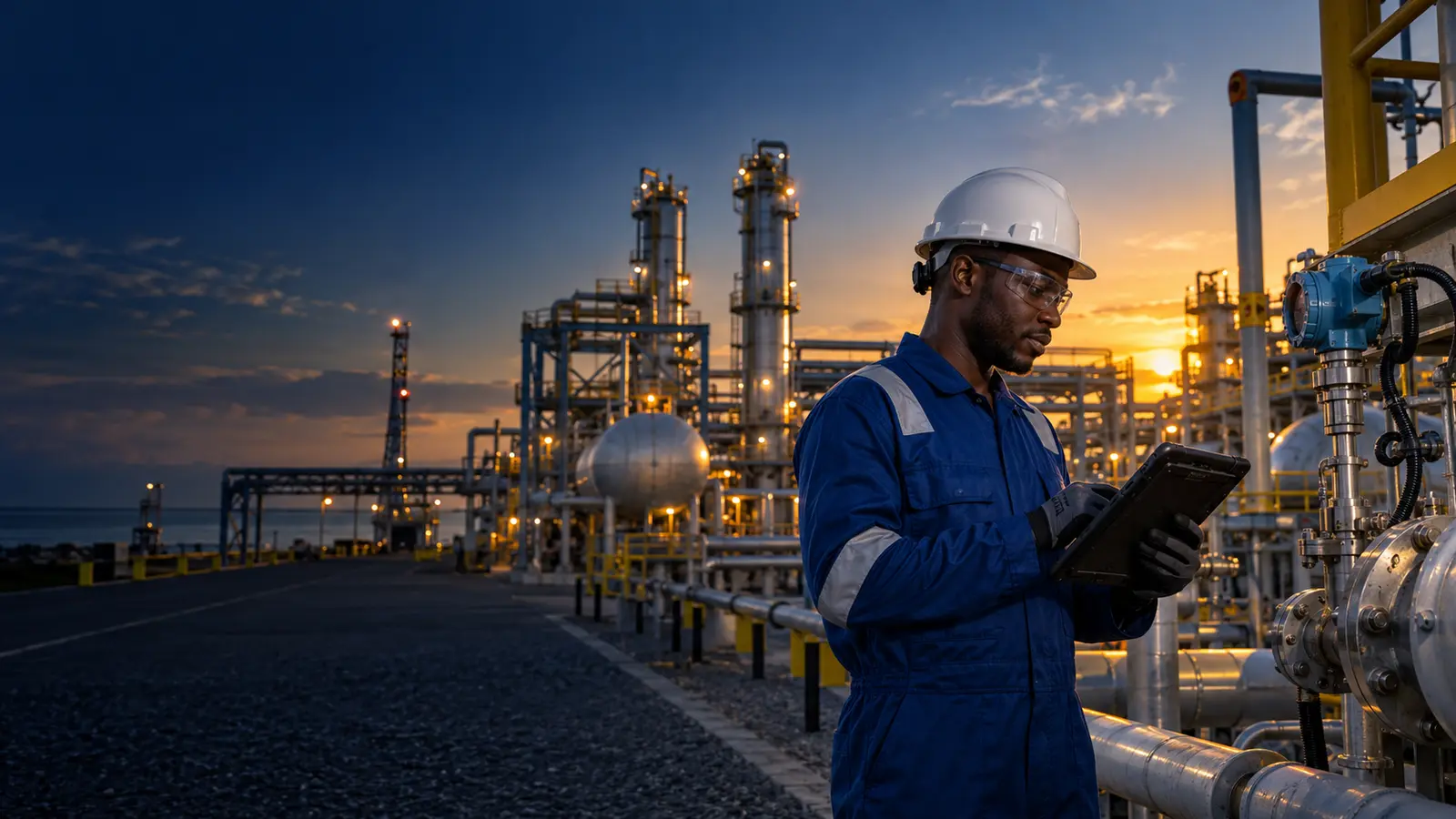
Smart Security and Connected Operations for Nigeria’s Oil and Gas Industry
In brief: Smart technology can improve visibility and accountability across oil and gas offices, yards, depots, project sites and remote facilities. Effective deployment begins with operational risk, hazardous-area requirements, cybersecurity, communications and response procedures, not with generic consumer devices.
Use cases across the operating environment
CCTV can support perimeter observation, gate verification, loading areas and incident review. Access control can restrict sensitive rooms and record personnel movement. Vehicle and asset tracking can improve dispatch visibility and utilisation.
Connected dashboards can combine events, status and reports, but each integration should have a defined operational owner and purpose. More data is not automatically better control.
Remote and challenging locations
Remote sites may face limited grid power, weak mobile coverage, dust, heat, rain and long maintenance journeys. Solar power, local storage, 4G links and buffered telemetry can help, but must be engineered from measured conditions.
Equipment selection should consider environmental ratings, mounting, lightning protection, spares, support access and the consequence of failure.
Safety and hazardous-area boundaries
Technology installed in or near hazardous locations must be assessed by competent specialists against the facility’s classification and applicable requirements. Ordinary cameras, access devices or electronics may not be suitable.
Security systems must never obstruct emergency egress or conflict with process-safety controls. Interfaces with fire, alarm or control systems require disciplined engineering and testing.
Cybersecurity and information governance
Separate security and operational devices appropriately, control remote access, maintain inventories and updates, and protect administrator accounts. Vendors should not retain uncontrolled permanent access.
Define ownership, retention and authorised use for video, access logs, location data and reports. Sensitive facility information should be shared only where necessary.
Delivery and lifecycle assurance
Begin with a site survey and requirements specification. Establish acceptance tests, documentation, training, maintenance intervals, fault escalation and spare-parts strategy.
A pilot can validate communications and workflows before wider rollout. Performance should be measured through availability, alert handling, evidence retrieval and operational outcomes.
Planning checklist
| Decision | What to confirm |
|---|---|
| Objective | The exact safety, security or operating outcome required |
| Environment | Power, connectivity, weather, users and site constraints |
| Evidence and data | Records, retention, permissions, privacy and reporting |
| Resilience | What must continue during power or internet interruption |
| Support | Acceptance tests, training, maintenance, warranty and escalation |
Frequently asked questions
Can solar cameras support remote oil and gas sites?
They can support suitable locations after assessment of energy demand, solar resource, communications, mounting and maintenance.
Can ordinary cameras be used in hazardous areas?
Not automatically. Equipment suitability must be assessed against the classified area and relevant safety requirements.
What information can be integrated?
Depending on approved systems, dashboards may combine video events, access logs, vehicle locations, device health and operational reports.
How should remote access be controlled?
Use named accounts, least privilege, strong authentication, secure network paths, logging and periodic access review.