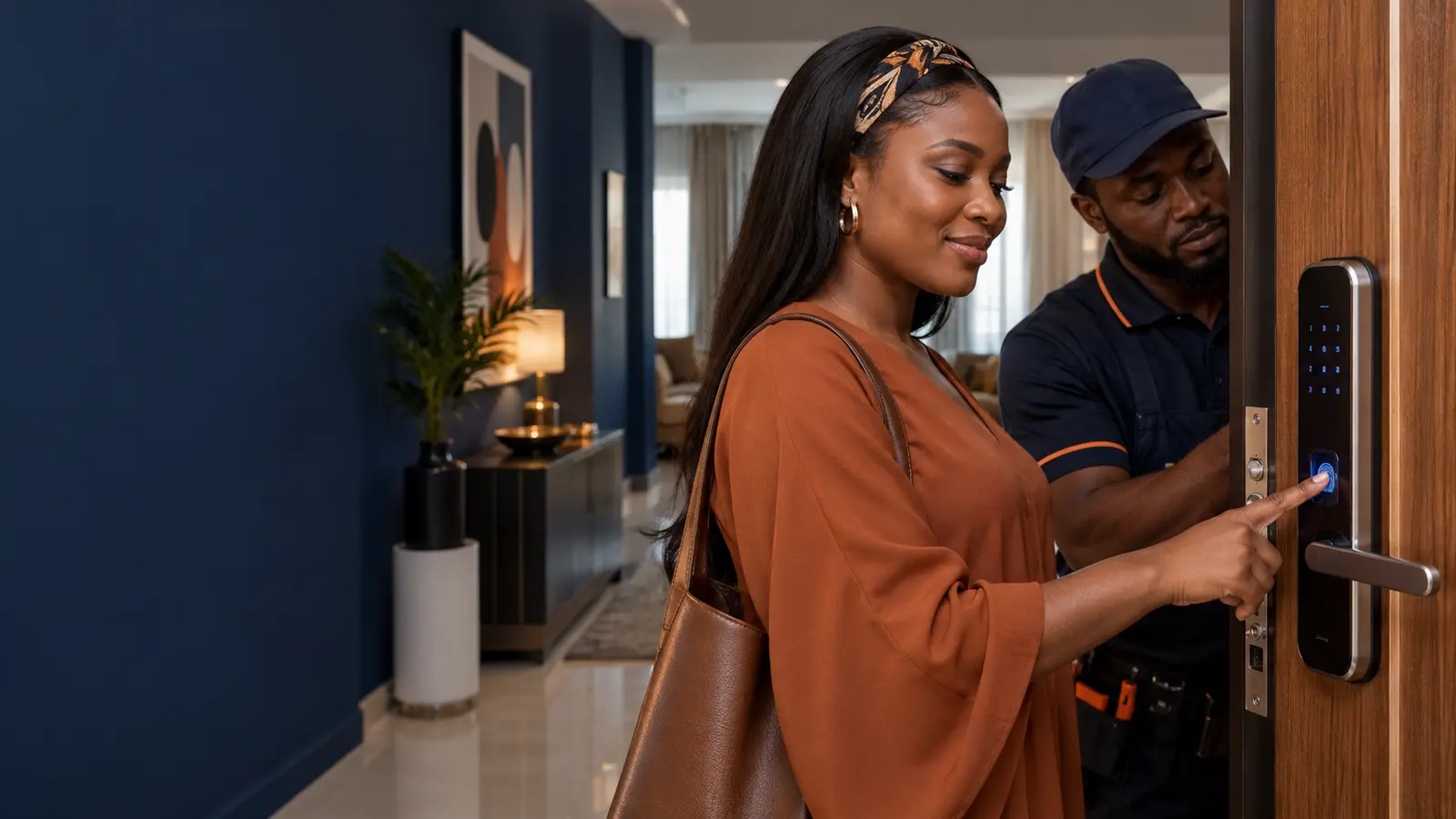
Commercial Smart Locks in Nigeria: Door Compatibility, Security and Management
In brief: A commercial smart lock combines electronic credentials with the mechanical work of securing a real door. The right product must fit the door and traffic level, protect administrator access, provide safe exit and retain a controlled emergency method when batteries, networks or user credentials fail.
Select around the door and use case
Glass doors, timber doors, aluminium doors, steel doors and multi-point residential doors require different hardware. Measure thickness, backset, opening direction, frame condition and traffic before selecting a lock.
Homes, rentals, offices and hospitality sites also need different credential, audit and remote-management capabilities.
Credentials and administrator control
PIN, fingerprint, card and mobile access may be combined. Unique credentials improve accountability; temporary codes or cards should expire and lost credentials should be removed immediately.
Administrator accounts should be limited and protected. Remote unlocking requires strong account security and a clear authorisation process.
Batteries, connectivity and emergency access
Battery-powered locks should warn before low power becomes critical and provide a documented emergency-power or controlled mechanical override method.
Local unlocking should remain available when possible. App control, cloud logs or notifications may depend on a gateway, Wi-Fi and external internet.
Installation and ongoing maintenance
Precise alignment reduces motor strain, failed locking and premature battery drain. Commissioning should test every credential, auto-lock timing, inside exit, low-power behaviour, privacy mode and emergency access.
Review users regularly, replace batteries proactively, keep the latch aligned and retain local support for parts, resets and warranty.
Planning checklist
| Decision | What to confirm |
|---|---|
| Objective | The exact safety, security or operating outcome required |
| Environment | Power, connectivity, weather, users and site constraints |
| Evidence and data | Records, retention, permissions, privacy and reporting |
| Resilience | What must continue during power or internet interruption |
| Support | Acceptance tests, training, maintenance, warranty and escalation |
Frequently asked questions
Can a smart lock fit an existing door?
Often yes, but the door, frame, lock case, thickness and opening direction must be assessed first.
Will it work during a power outage?
Battery-operated locks normally continue locally, while gateways and remote features may require backed-up power.
Can temporary users receive access?
Many systems support time-limited PINs, cards or mobile credentials.
Are smart locks suitable for high-traffic offices?
Only products rated for the traffic and door type should be used, with proper management and maintenance.